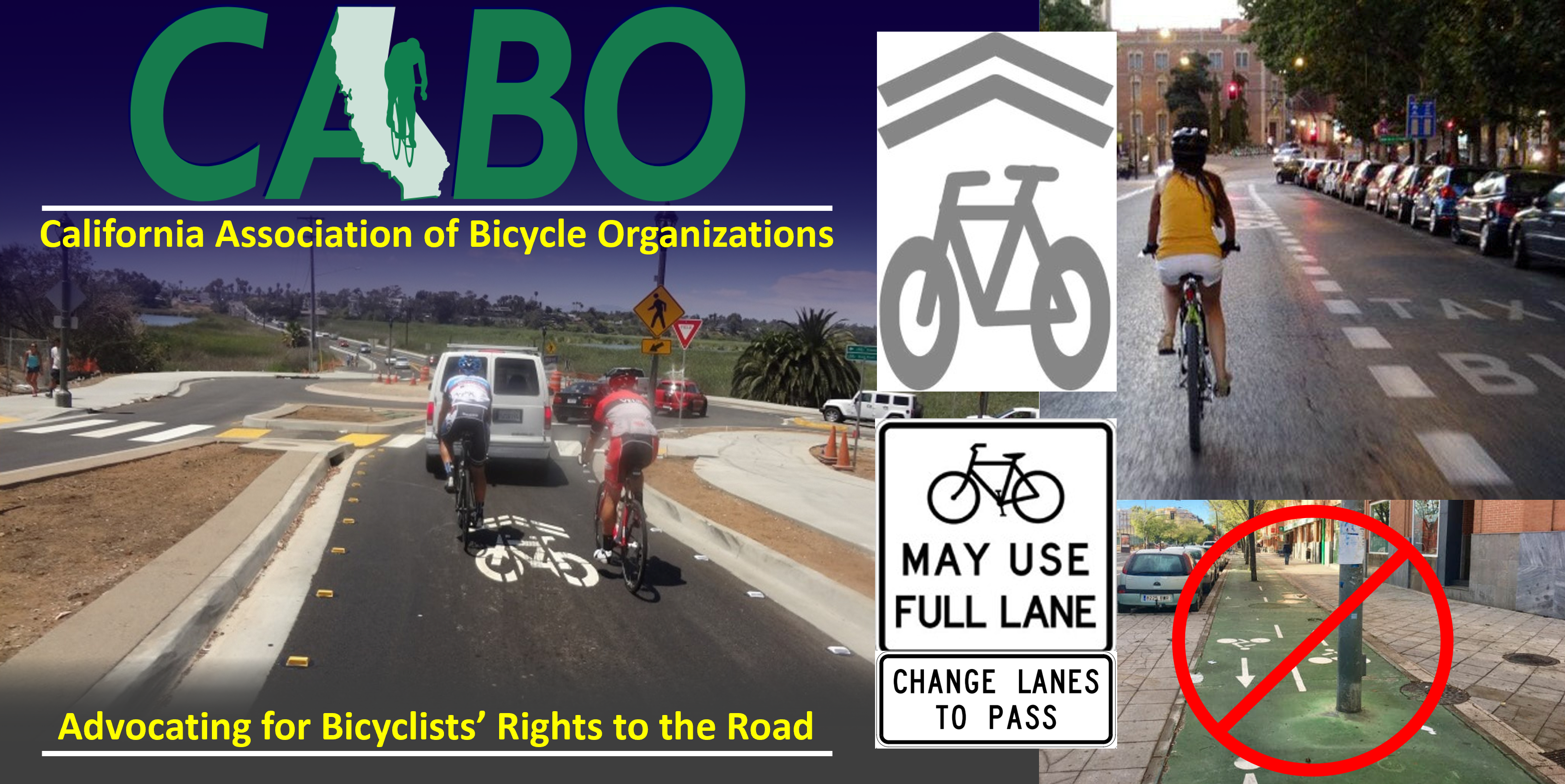
In 1972, CABO began at the All-California Bicycle Club Convention on the state conference grounds at Asilomar, on the Monterey Peninsula, which was sponsored by the Grizzly Pedal Pushers and the League of American Wheelmen and supported by the Bicycle Institute of America. There, the bylaws were drafted, officers elected, and initial priorities identified. There were to be four statewide meetings per year. (Now just three formal meetings per year, attended mainly via Teleconferencing.
California’s bike clubs have been organized into a state federation. CABO (the A is long) was formed to protect bicyclists’ interests statewide. From the beginning, it was thought of as a federation of clubs and other organizations interested in bicycling, rather than as an organization of individuals belonging to the member clubs.
CABO was involved in the initial drafting of the design standards known as Chapter 1000, originally titled “Planning and Design Criteria for Bicycles in California” and popularly known as the Blue Book, which has served as a model for other states.
CABO initiated a freeway shoulder study, which eventually led to the opening of over 1,000 miles, and later fought back against the legislature on their bill to prohibit bicyclists from all freeway shoulders (ostensibly to protect children).
CABO continues to protect bicycling organizations against local authorities that seek to prohibit bicyclists’ use of the road. Invitational rides and regularly scheduled club events are the heart and soul of club activities. A legal fund was established to protect our rights against unjust, restrictive local ordinances. The fund is presently depleted due to our appeal effort to reverse judicial decisions that have apparently resulted in the removal of legal liability for Bike Paths that are not designed, constructed, and/or operated to State standards for Class I, Bicycle Paths.
The relevance remains for CABO to be ready, strong, and able to speak up for the right to travel by bicycle on public transport facilities.
This is a brief overview of CABO’s history. If you are at all interested in a more complete accounting, a copy of Alan Wachtel’s article in Bicycle U.S.A. is available here.